The play The Laramie Project: Ten Years Later, follows the community of Laramie, Wyoming one decade after the brutal murder of Matthew Shepard, an incident which caused hate crimes to be classified as a separate form of crime. This violent act stemmed from homophobic ideals held by the perpetrators, hence why it is a hate crime. The dialogue in the script is taken from real interviews with those involved, in some way, with Shepard’s death, and was a project from the Tectonic Theater Company in New York.
A large thematic element of the piece is the idea of change, and how Laramie has changed and grown following the incident, while also emphasizing how present Shepard’s death still feels. Additionally, a recurring idea is that many have begun to dismiss the crime as “a robbery gone bad” or “fueled by drugs,” and some even go as far to say that considering Shepard’s murder to be a hate crime would be a hoax. This reveals a truly intriguing thing about human nature. The fact that it is easier to accept that it was drugs, something that is tangible and has a clear solution, rather than homophobia, which is a deeply rooted prejudice with no definitive way to remove it from the human psyche. Laramie was just like any other community, and if hatred can take hold so violently there, it could happen anywhere. This is a reality many are unable to accept, so they deflect the issue onto drugs, or robbery, because hatred is the strongest poison that can muddy the metaphorical waters of a community.
The interviews with McKinney and Henderson are particularly impactful, as they were the ones who killed Shepard 10 years earlier. The stark contrast between Henderson’s deep shame surrounding the incident, and McKinney’s complete apathy is a seriously fascinating glimpse into criminal psychology, and how different these two men are, despite both being intertwined through their crime.
The audience also gets a glimpse into the lives of Dennis and Judy Shepard, Matthew’s parents, following the incident. With a simple, yet deeply impactful, monologue at a bench dedication ceremony for Matthew, his father shares that they used to make a sort of competition out of who had broken their nose more. Matthew’s nose was broken when he was murdered, leaving him ahead of his father. Just a week before the dedication, his father had broken his nose, making them tied, once more. As for his mother, she continues to speak out about what happened to her son. On October 28th, 2009, Judy Shepard stood next to Barack Obama as he signed the Matthew Shepard and James Byrd Jr. hate crimes prevention act into law.
This play reflects the changes that came about following the incident, but also highlights the work that we as people need to put in to continue to keep our communities safe. With the rate of hate crimes rising by 100% since 2015, Matthew Shepard’s story is more relevant than ever before.
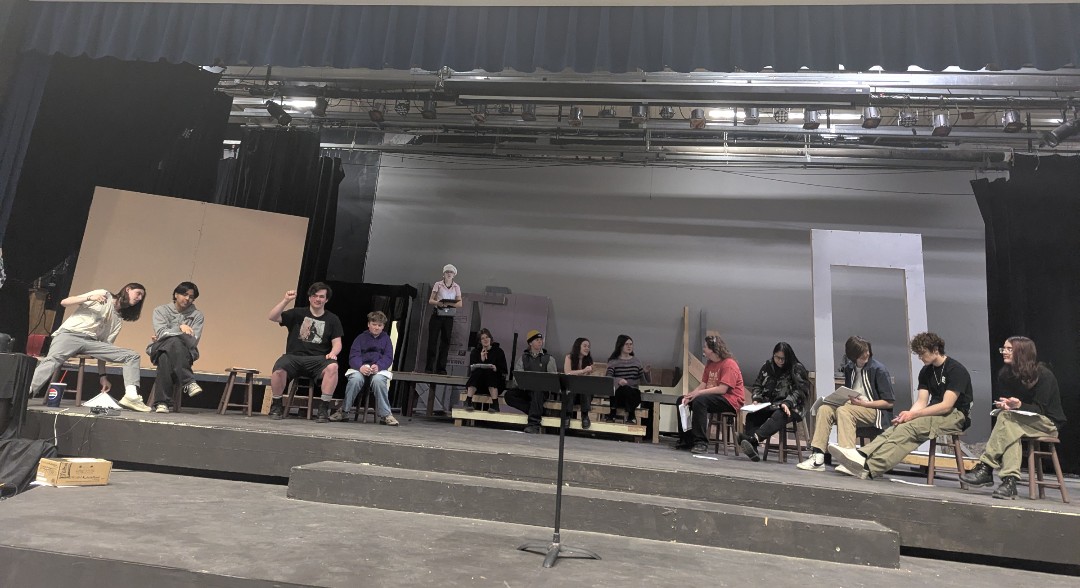
Troupe 1096 at DHS will open this production on February 27th, and it will run until March 7th. The cast and crew are composed of a group of incredibly talented and dedicated students, who have been working hard to do justice to this meaningful story. Tickets can be purchased at troupe1096.weebly.com or at the box office closer to opening.