Around the world, there are many people with all sorts of disabilities that hinder their day-to-day living. Many people who have these disabilities can’t be seen or detected by normal means, which is a significant threat to their lives, depending on what disability they have. However, dogs have a superior and keen sense to the abnormal, and can sense when something might be wrong with a human, such as sudden weird changes in behavior that may lead to a seizure.
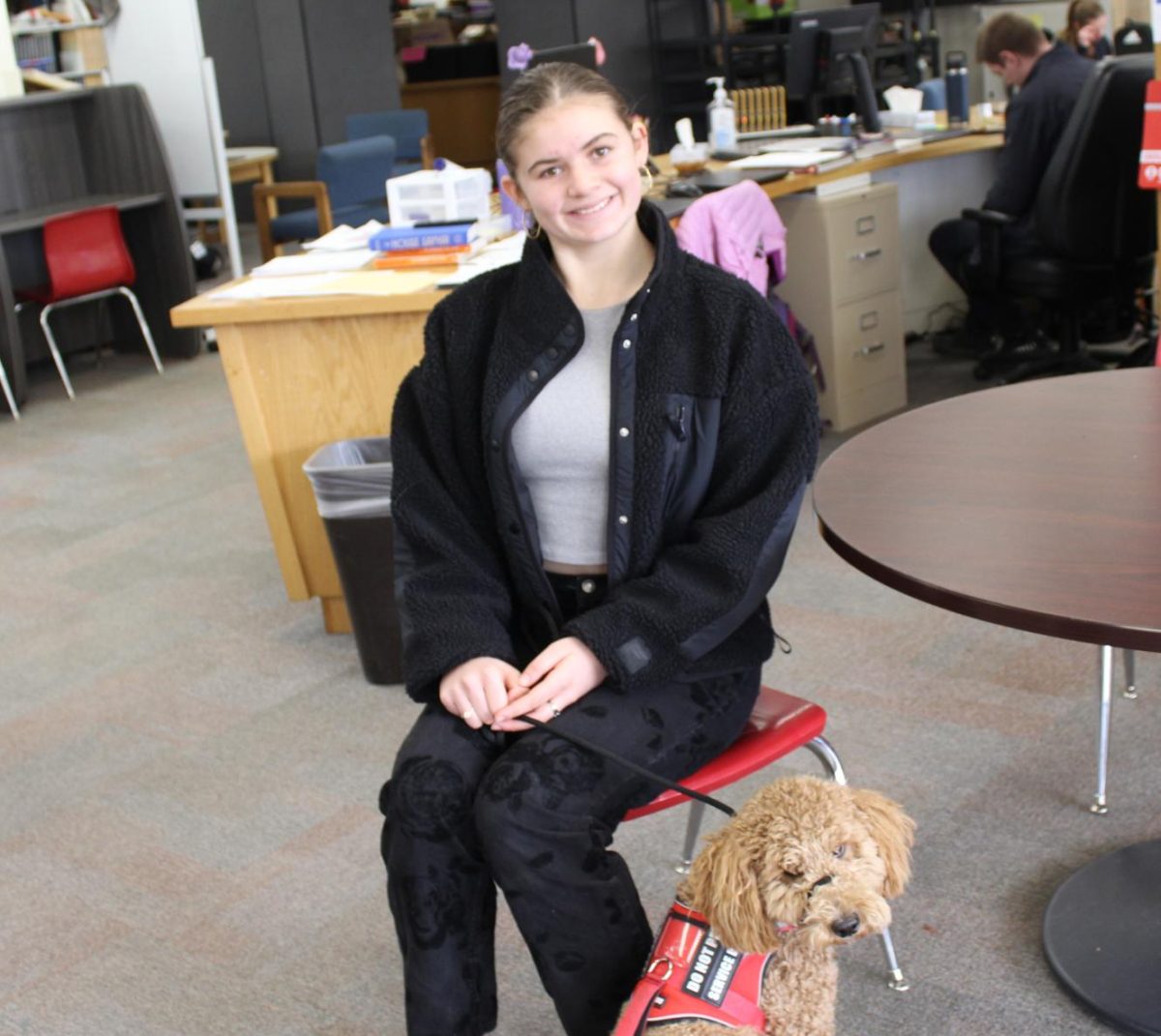
Meet Evangeline Fisher, a Freshman at Durango High School. You may have seen her around the halls, most notably with her specially trained service dog named Goldie, the golden poodle! Fisher is diagnosed with epilepsy, which causes seizures in the brain, which then leads to muscle spazzing and convulsions. This is where Goldie comes in, as she is witted in being able to detect when Fisher might start having a seizure. There’s many ways a dog can be able to detect and alert someone that they will have a seizure soon, and according to Psychology Today, studies suggest that it could have something to do with scent.

Fisher relies a lot on Goldie, and you may have noticed that Goldie wears a bright-red vest that says “DO NOT PET”, but why is that? Well, service dogs need to constantly be aware of their owners at all times. If someone were to mindlessly pet their dog, this can distract them from their job, and when off-track, can make them forget about keeping their owner safe. If the owner were to suddenly start having issues, it would cause terrible issues as they weren’t able to be alarmed from their dog beforehand due to being distracted. However, with consent beforehand, it’s okay to pet some service dogs. For example, Fisher says that Goldie is extremely well at her job, and can be pet after being given permission to. Goldie is able to get back on track from the whim of Fisher’s call, which means that others can give love to Goldie! This won’t always be the case though, as some service dogs aren’t as well trained. Please exercise caution and ask beforehand before touching anyone’s dog, service or not!
Fisher says this is her first year having Goldie, so she’s continuing to navigate around with her assistance, but she claims that despite a few cons, she is way more of a positive than ever considered a burden. Goldie is very reserved and tends to not care about other people or dogs when around them, so she never finds herself accidentally attracted to another dog, even ignoring the opposing dog’s want to play, according to Fisher. Classmates of Fisher have been able to adopt the same mindset as well, simply accepting “Well, there’s just a dog here now.” after a few days with Fisher and Goldie around. It’s not really all positives though, as Fisher says that Goldie will “sometimes just not like specific classrooms, which makes accommodating her quite hard”, “I always have to carry more stuff to make sure Goldie stays comfortable when attending classrooms, and the crowded lunch lines can also prove to be difficult”. But no matter the difficulties, Fisher definitely confirms Goldie is a much-needed help in her life, and she loves Goldie just as much as she needs her!
We’ve talked about dogs that you shouldn’t try to pet, but there is a type of trained dog that would love for you to pet! Therapy dogs are dogs that are personally trained and tested through the American Kennel Club’s (AKC) Canine Good Citizen (CGC) therapy dog program, which requires them to be well-mannered and a soft temperament. It also requires dogs to be able to be open to anybody they come across, at any time! The CGC test requires quite a few steps completed to become a certified therapy dog, and some of them follow as being able to be pet by any stranger, and being polite as they do so, and being very keen in tense situations, like navigating through giant crowds, and coming when called. It isn’t a rigorous challenge, but required for a therapy dog to be able to enter mandated facilities. Don’t mix them up though, as therapy dogs can’t enter anywhere they want to, opposed to service dogs, who are legally required to. The Americans with Disabilities Act states “Under the ADA, State and local governments, businesses, and nonprofit organizations that serve the public generally must allow service animals to accompany people with disabilities in all areas of the facility where the public is allowed to go.”, but this doesn’t apply to therapy dogs, even if they’ve been certified by the CGC.


If you were here at Durango High School during 2018-24, you may have noticed a golden retriever in the halls from time to time. That was Jane the Dog! Amanda Rich, a psychologist, licensed Jane under the CGC test, and brought her all the time to DHS! Jane’s primary goal at DHS was to alleviate the moods of students who may be having a rough time during their classes, and they would always make appointments with Rich just to come and lay down and relax with Jane, which always warmed Rich’s heart. Rich would also have Jane in more public places from time to time so that anybody could say hello to her, and she would always love the attention! As a psychologist herself, Rich has seen how people interact with therapy animals in school environments, and she thought to
herself that it’s just what Durango High School needed itself! Since she first got her in 2018, Rich initially says “I was worried that there would be major issues with allergies, but through the years I’ve received absolutely 0 complaints, which made me realize this is really worth it.”. To our saddest news, in 2024, Jane had been put to sleep from an obstructive tumor that heavily impacted her well being, and Rich decided this was the best way to take action. Jane was loved by everyone, and it was terribly sad to hear the news, especially with how many memories and how many hearts she had touched, but she’s sleeping well.

In 2026, Rich has decided that it’s time for a new addition to DHS, and with that, she adopted Stewie! As of writing, Stewie is only 4 months old, and the CGC requires a dog to be at least a year old before they can take the test, so Stewie’s going to have to wait until September until she’s able to become certified! While she’s growing, Rich will be giving her the best care!
The biggest takeaway should be to remember that you should always ask anyone if you can pet their dog, and especially if a dog is marked with a “service dog” harness, with a red and black color. Attempting to pet a service dog that may be working can disrupt them and be dangerous to the owners! Service dogs take a good amount of time to refocus after being distracted, so please do them good by either asking if you’re confident and know the person if you can pet, or just disregard their service dog all together.